Origami v1.0 is our first open hardware and software robot — designed from the start for schools, universities, small businesses, and anyone who's been priced out of the conversation so far.
Under $6,000. Every schematic, every model, every line of code: open. Physical layer fully customisable — swap parts, modify joints, rebuild it after you've crashed it. That's not a bug. That's the point.
Print it yourself, order in bulk, or train it through our platform and enroll in our Robotics 101 course — included with every Origami. Everything you build in simulation transfers directly to the physical robot.
The real product isn't the robot. It's trust.
Every major humanoid company has the same problem: nobody wants them in their home yet.
Some carry the brand risk of one of the most polarising figures on the planet. Others are built for factories — they look and feel like industrial machinery. And at $16,000–$20,000, none of them were designed for the spaces where most people actually live.
The robots that will enter homes, schools, and care facilities need to arrive a different way. They need to earn their place — interaction by interaction, in the spaces where people already feel safe.
That's what Origami is designed to do. Not to be the most capable robot on the market. To be the first one families genuinely trust — because they've already seen it at their child's school, at their parent's care facility, at the car dealership that helped them in their own language.
When humanoids are ready for the home — and they will be — the trust infrastructure needs to already exist. runibi is building it now.
-
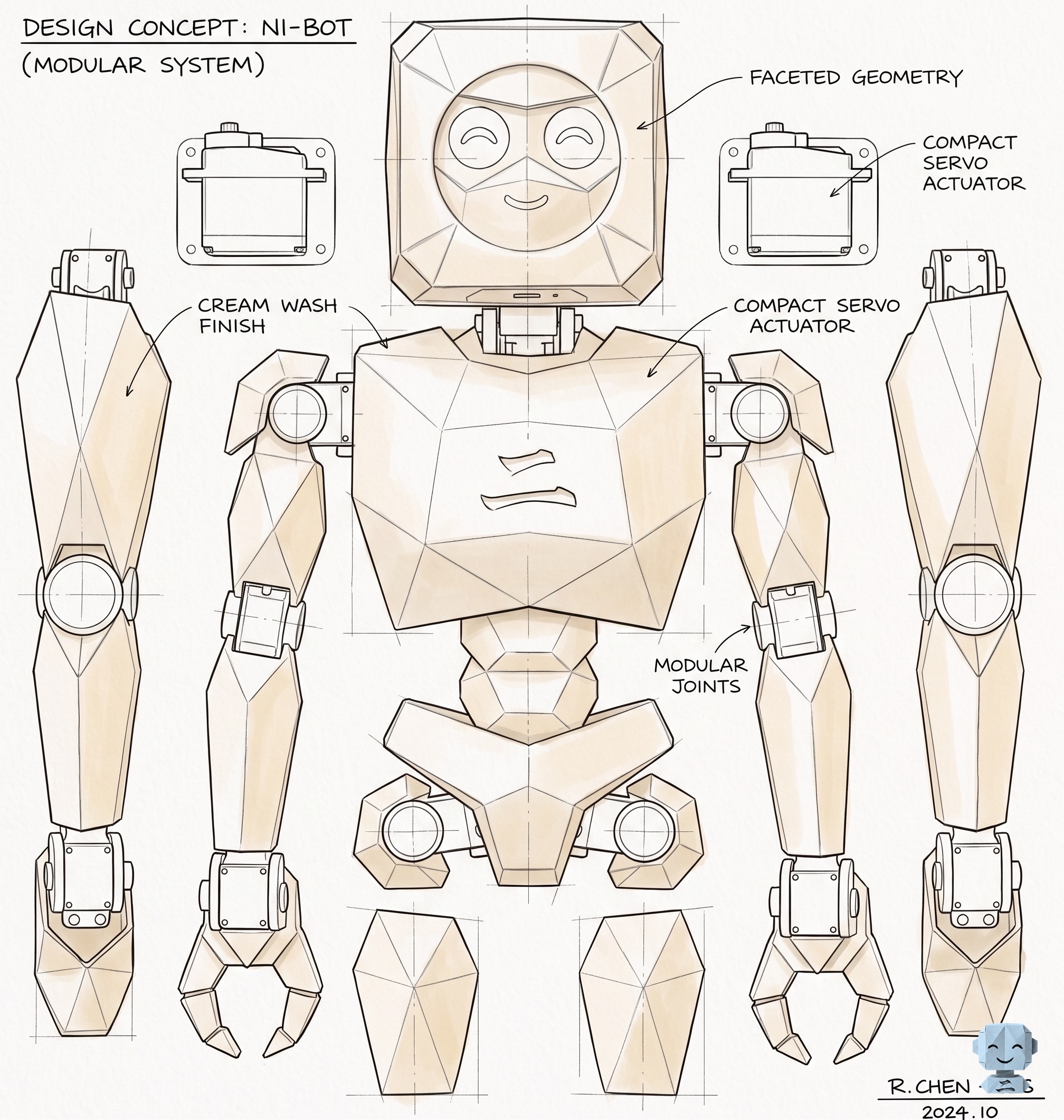
Industrial drawing
-
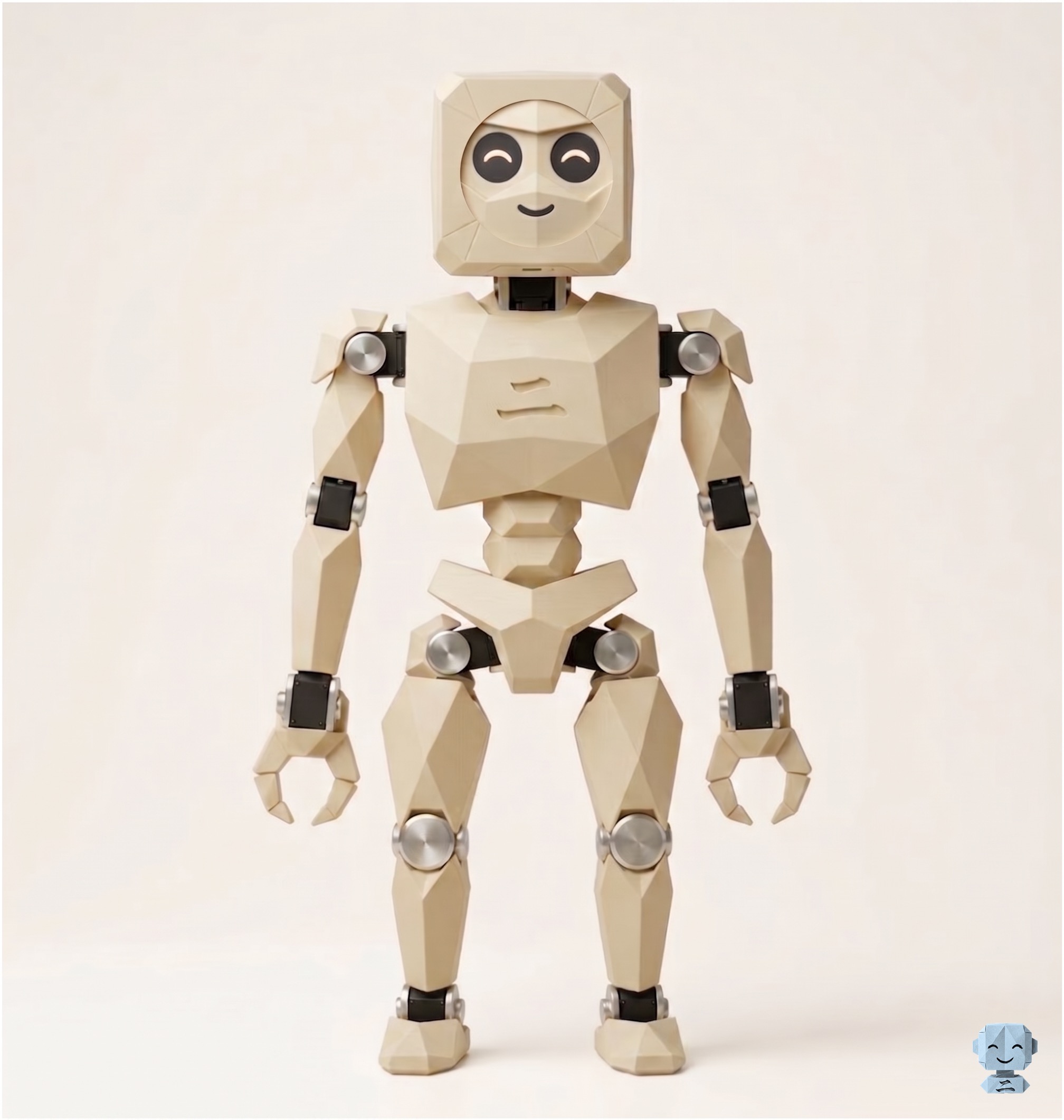
Origami v1.0 assembled
-
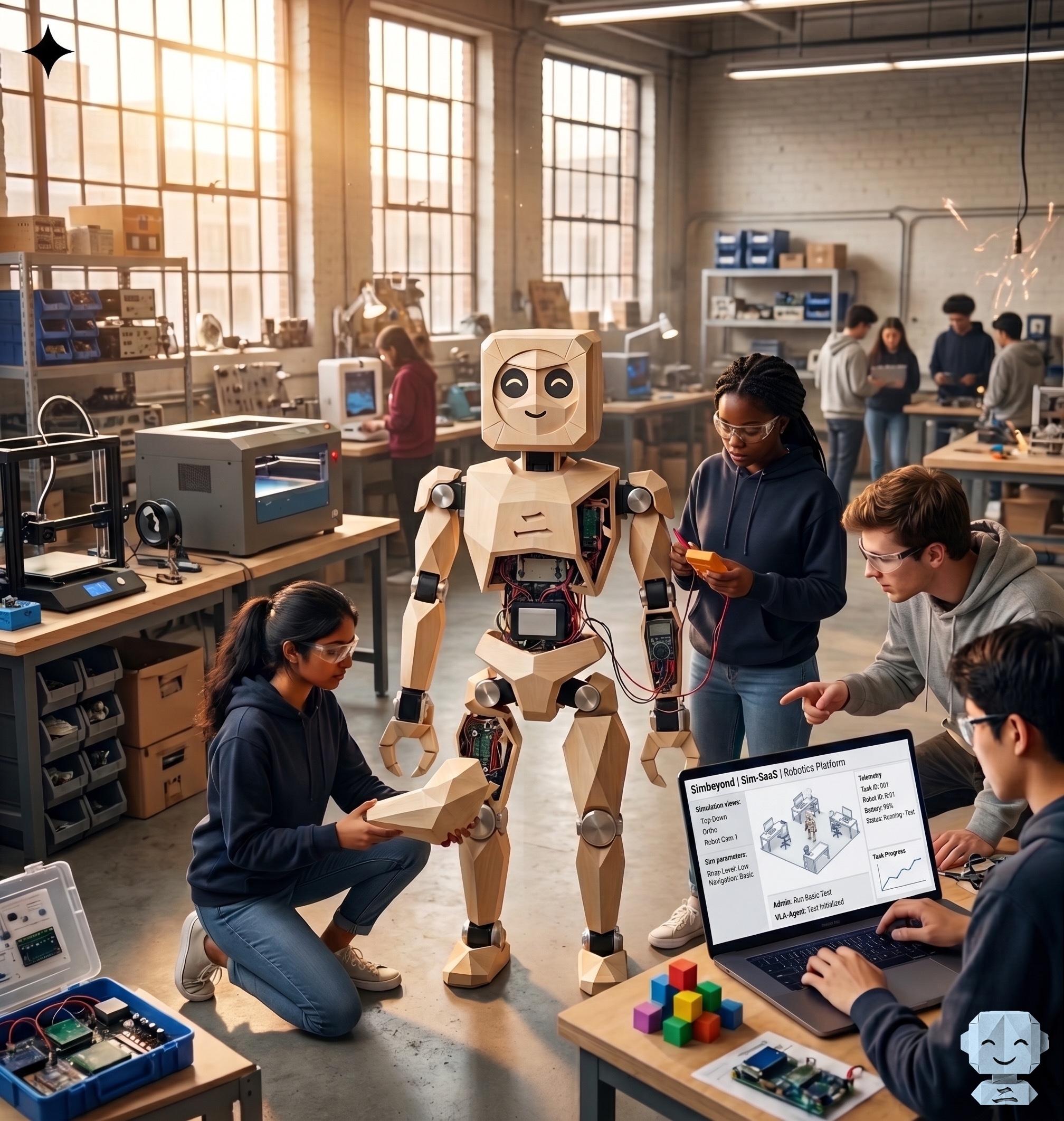
Open hardware — built to be modified
-
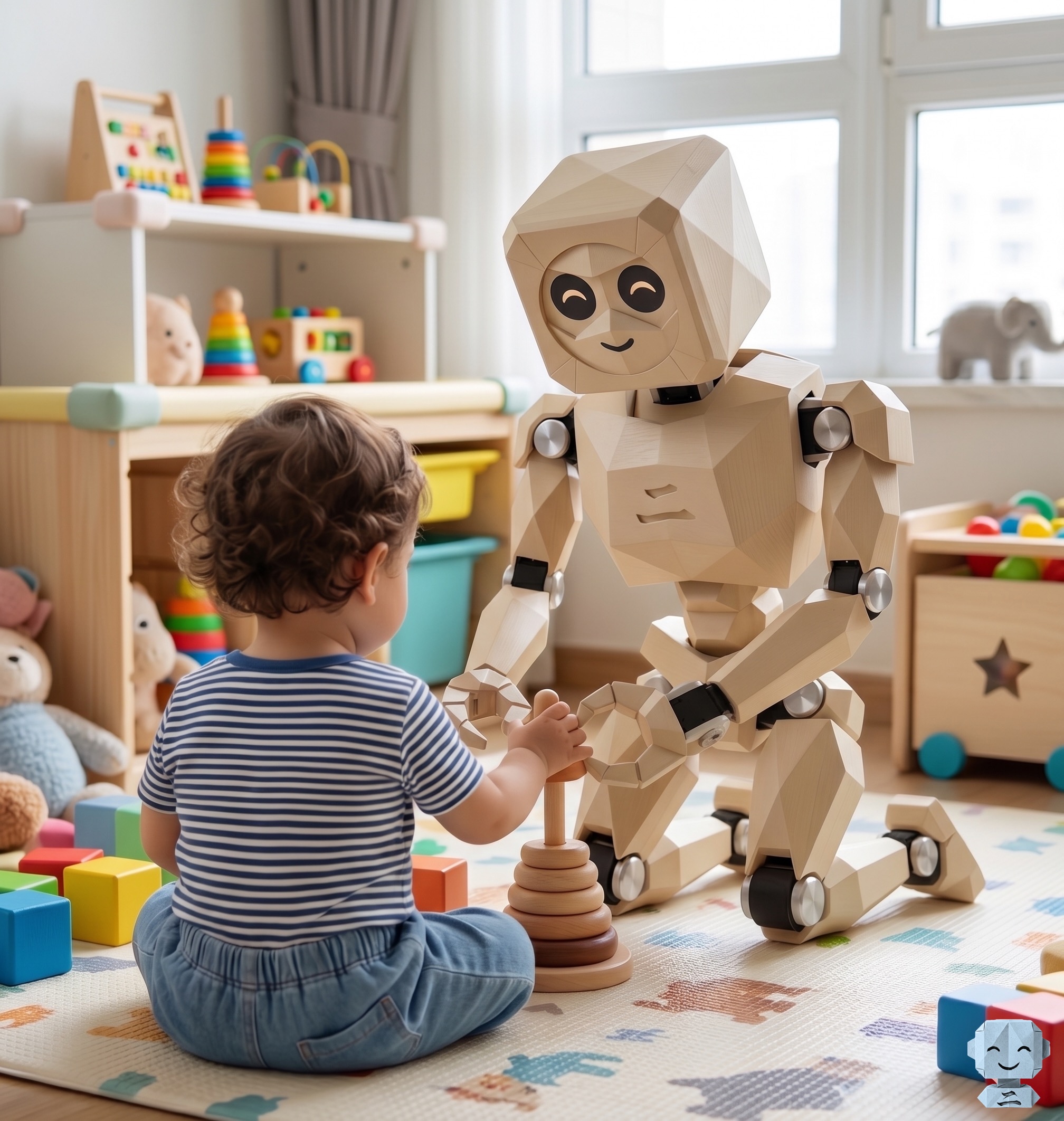
Safe around children by design
Small enough to be safe. Light enough to matter.
We're targeting a payload of 600g to 1kg — enough to serve a cup of tea, hand over a document, or greet a customer. Not enough to cause harm if something goes wrong. Light enough that it's safe around children, hobbyists, and anyone who isn't a trained technician. Small enough to sit on a desk or operate in a classroom without a safety perimeter. This isn't a toy. But it is something a curious twelve-year-old can interact with without a liability waiver.
Getting it built — and teaching people to use it.
Hardware is harder than software. We're building components in our own labs in Australia and Japan, and assembling Origami in Japan — sourcing common parts in bulk by repurposing supply chains from adjacent industries. A power drill and a robot actuator have more in common than you'd think. Open hardware keeps the cost honest: no licensing fees, no proprietary components, no markup on parts you can source or print yourself.
Alongside the hardware, every Origami ships with a full Robotics 101 course — taught by researchers who are actively building in the field. Step by step, from curious to capable. Like the robot itself, it's structured as origami: fold by fold, until something remarkable takes shape. Available in English, Japanese, Portuguese, and Spanish from day one. Because a teacher in São Paulo and a student in Osaka shouldn't have to wait for a translation.
The loop closes here.
Everything in Pillar 1 was designed with Origami in mind. The simulation environment connects directly to Origami's platform. What you teach in the browser transfers to the physical robot. The same interface. The same AI. No re-training, no re-coding, no translation layer between digital and physical. Most platforms require switching tools, switching environments, and starting over — the same wall most people hit before they ever get started. We removed it.
You learn in simulation. You test on our fleet. You deploy to Origami. One loop, from curiosity to a robot you can hold in your hands.