"Humanoid robots are the only realistic answer."

The hardware is arriving. The models are catching up. The technical question is no longer can we build them.

The question is who gets to teach them — and whether the people who most need robots will ever get a seat at that table.

Humanoids can't stay locked behind $50,000 price tags. They have to be cheap enough, open enough, and teachable enough that society itself folds its knowledge into them: step by step, like origami.

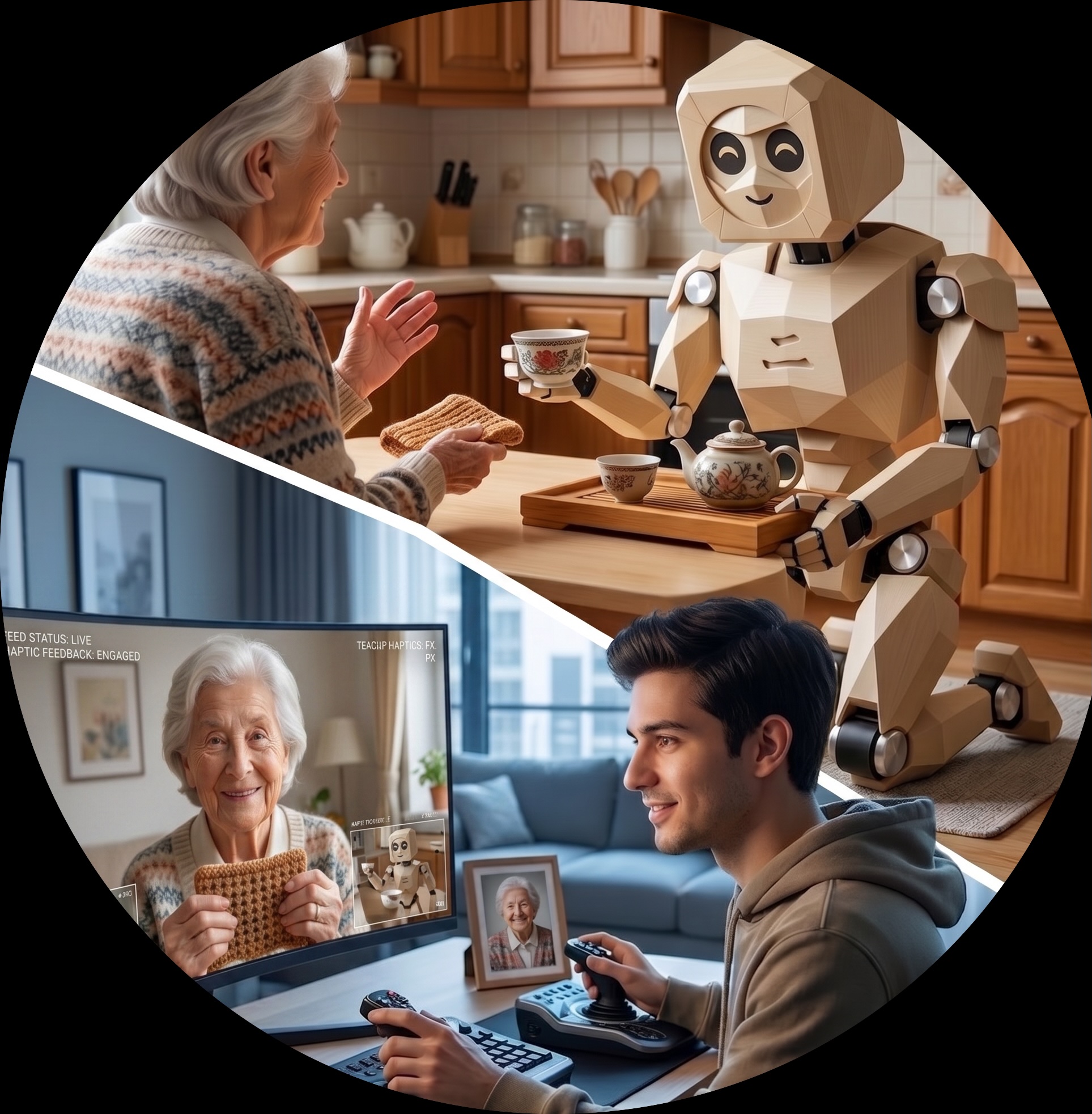
Elderly woman receiving tea from Origami robot while a young man teleoperates it remotely

The use case that changes everything

Your grandmother is 10,000 km away.
You can still make her coffee.

Not a video call. Not a voice message.

You open your laptop. You navigate her house through Origami's eyes. You move to the kitchen, boil the water, bring her a cup, and sit across the table while she drinks it.

Origami can display your face. Not a speaker on a stick — a physical presence that looks like you, moves when you move, and lets you be there when you can't be there. You can hold her hand. She can see you smile.

This is what we mean by robotics belonging to everyone. Not just access to robots. Access to each other.

The Three Pillars

That is what runibi is building.

Pillar 1

Solving the Data Problem

Simulation as a Service + Robot as a Service. Anyone can open a browser, meet a robot, and start teaching it — no hardware, near-zero cost. Together these two services collect natural human–robot interaction data from outside the lab — from teachers, caregivers, small businesses, and students.

Read more →
Live · Currently building

Pillar 2

Origami v1.0

An open hardware and software humanoid under $5,000, standing no taller than 1.2m, weighing under 15kg. Every schematic, every model, every line of code: open. Built for schools, hobbyists, and anyone who's been priced out of the conversation so far. What you build in simulation transfers directly to the physical robot.

Meet Origami v1.0 →
Q4 2026

Pillar 3

Embodied Trust

Research into how an embodied agent stays safe in situations it was never trained for. Pillars 1 and 2 aren't separate from this work — they're how the research gets done. Every simulation session and real-robot interaction generates the diverse, real-world data that makes the question answerable.

Read our research →
Ongoing

Currently building. Early access waitlist opening soon.

Talk to Rafa →